How Can German Constitutional Law Promote the Inclusion of Migrants?

Anuscheh Farahat
Profile Picture of - Anuscheh Farahat

Anuscheh Farahat

Abstract information

Through immigration, our society is becoming more diverse. However, the integration and inclusion of migrants is often difficult. ANUSCHEH FARAHAT is interested in the question of how this inclusion can be promoted through the means of law. In particular, she focuses on the structural obstacles migrants face when attempting to participate in society, such as when entering the job market or higher education. As she explains in this video, she, therefore, examines how the constitutional law in Germany can be used to combat structural inequalities. Establishing a definition of inclusion that sees it as an interactive process involving multiple actors, not only the migrants, she has found that the German constitution already provides a tool to implement such an interactive form of integration: the principle of equality. Of course, the law can only achieve integration to a certain extent as it is also dependent on the participation of the public.

DOI:

https://doi.org/10.21036/LTPUB10549

Researcher

Anuscheh Farahat is Senior Research Affiliate at the Max Planck Institute of Comparative Public Law and International Law. She is also Director of the Emmy-Noether Research Group on ‘Transnational Solidarity Conflicts’ at Goethe University Frankfurt. She has undertaken international research at universities in Lisbon, Madrid, and Granada and was William K. Coblentz Fellow at the School of Law of the University of California, Berkeley. Her research interests include European and German constitutional law and German and European migration management. For her scholarly work, she has received several awards, such as the Hermann Mosler Prize of the German Society of International Law, and she is a member of the German Young Academy of Science.
Institution information

Friedrich Alexander Universität Erlangen

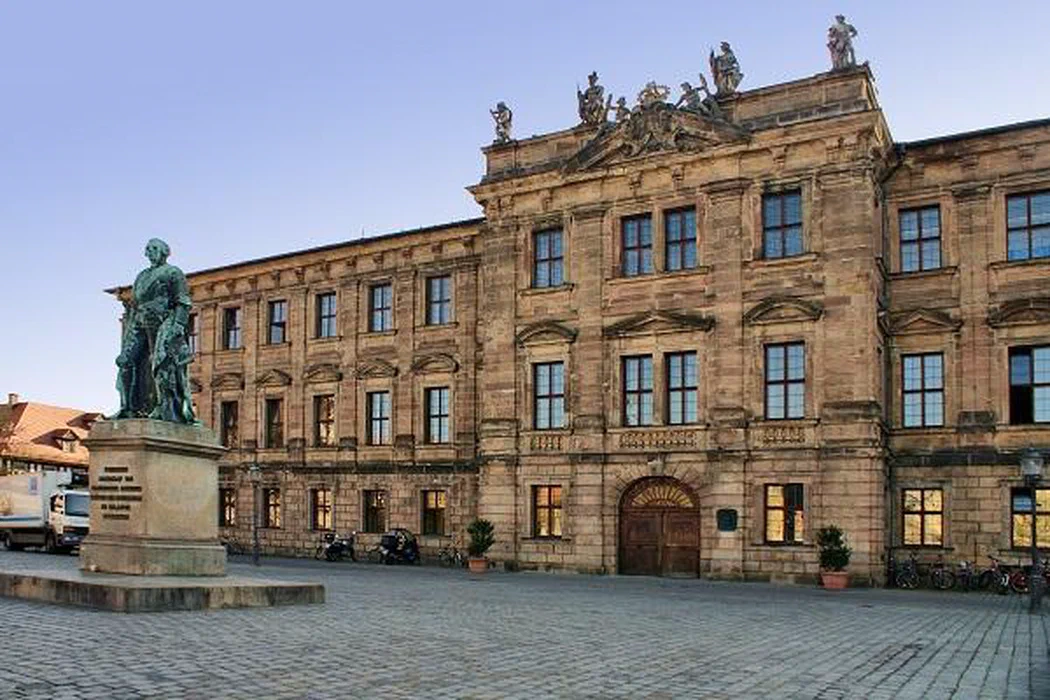
Friedrich-Alexander-Universität Erlangen-Nürnberg (FAU) was founded in 1743 and is today one of the largest research universities in Germany, with five faculties spanning the humanities, social sciences and theology, business, economics and law, medicine, sciences, and engineering. With around 40,000 students, nearly 20% of them from abroad, FAU is spread across two main sites in the cities of Erlangen and Nuremberg. The university is particularly known for its strengths in optics and photonics, new materials, and medical technology, and ranks first in Germany among the world’s most innovative universities.
Cover Photo of -

Original Publication

Inklusion in der superdiversen Einwanderungsgesellschaft: Verfassungsrechtliche Eckpunkte

Anuscheh Farahat

Published in

Citation

Anuscheh Farahat, 

Latest Thinking, 

How Can German Constitutional Law Promote the Inclusion of Migrants?, 

https://doi.org/10.21036/LTPUB10549, 

Credits:

© Anuscheh Farahat 

and Latest Thinking

This work is licensed under CC-BY 4.0