Do Moral Capacities Change With Improving Living Conditions?

Christian Welzel
Profile Picture of - Christian Welzel

Christian Welzel

Abstract information

We can see progress all over the world, such as technological transformations, or rising life expectancies and literacy rates. Are these improvements in material conditions accompanied by a change in moral standards? So far, such questions have mainly been discussed in the area of philosophy. CHRISTIAN WELZEL is interested in finding empirical evidence that allows tangible conclusions on this matter. As he explains in this video, his research team uses public opinion surveys, in particular, the World Values Survey, which questions people all over the world about their convictions and beliefs. They, then, compare these data with objective data about people’s living conditions. Their findings suggest an overarching organizing scheme that locates people’s mindsets between two poles: submissive instincts and emancipatory drives. They also found that mentalities in societies change over time depending on exterior conditions.

DOI:

https://doi.org/10.21036/LTPUB10537

Researcher

Christian Welzel is Chair of Political Culture Research at the Centre for the Study of Democracy, Leuphana University of Lüneburg. Furthermore, he is Vice-President of the World Values Survey Association, Stockholm, and Foreign Director of the National Research University - Higher School of Economics, Moscow. His research interests include value formation, cultural change, and public opinion as well as social change and human empowerment. For his scientific work, he has received several awards, including the Alexander L. George Award for Freedom Rising (2013). He is also elected Member of the German National Academy of Sciences Leopoldina and Fellow of the Center for the Study of Democracy, University of California, Irvine.
Institution information

Leuphana University, Lüneburg

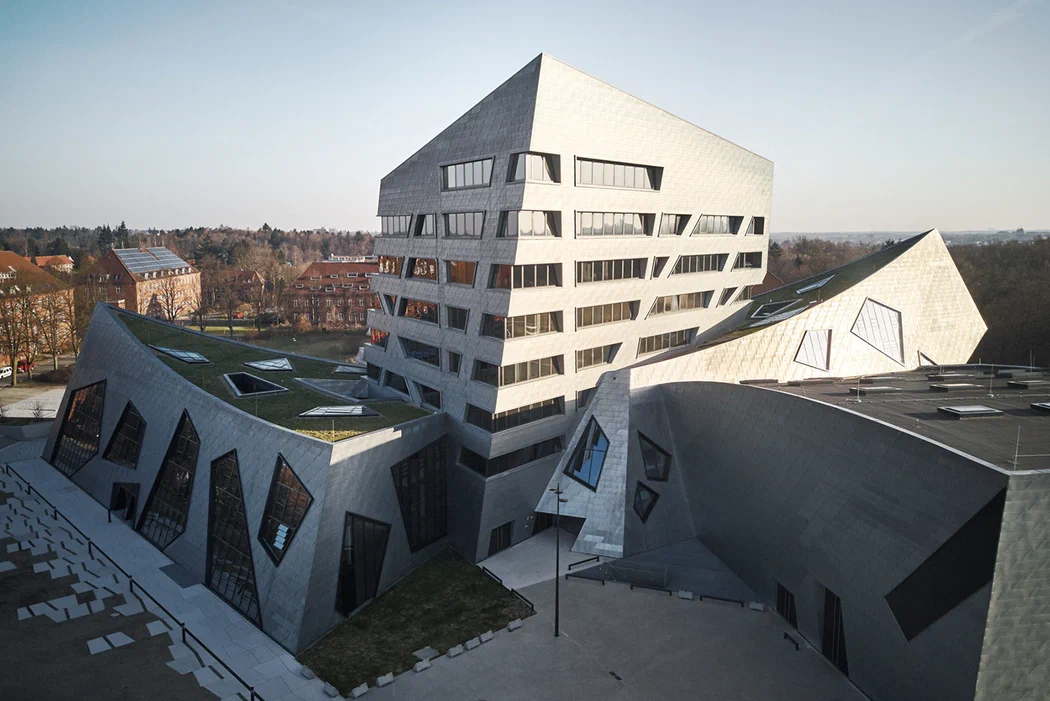
Leuphana University Lüneburg is a public “model university” established in 1946, known for its radical departure from traditional German academic structures. It operates on a unique liberal arts-inspired model where all undergraduate students, regardless of their major, start with a shared interdisciplinary “Leuphana Semester” to foster critical thinking and social responsibility.

The university is highly regarded for its focus on sustainability, cultural studies, and education research. Its central campus is visually defined by the Libeskind Building, a deconstructivist landmark designed by architect Daniel Libeskind. As a climate-neutral institution, it emphasizes humanism and entrepreneurship, serving as a prominent hub for social innovation and sustainable development in Lower Saxony.

Cover Photo of -

Original Publication

Freedom Rising

Christian Welzel

Published in

Citation

Christian Welzel, 

Latest Thinking, 

Do Moral Capacities Change With Improving Living Conditions?, 

https://doi.org/10.21036/LTPUB10537, 

Credits:

© Christian Welzel 

and Latest Thinking

This work is licensed under CC-BY 4.0