What Happens to Carbon Dioxide in Plant and Soil Systems?
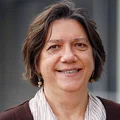
Susan Trumbore
Profile Picture of - Susan Trumbore

Susan Trumbore

Abstract information

The accumulation of carbon dioxide (CO2) in the Earth’s atmosphere is responsible for one of the most pressing problems of our age, global warming. In this video, SUSAN TRUMBORE analyses the key role that plant and soil systems play in the carbon cycle in order to better understand how they can assist us in combating this issue. Trumbore explains how Carbon-14 (or radiocarbon), a byproduct of atmospheric weapons testing in the 1960s, can be traced through plant and soil systems in order to understand how those systems store and process CO2. Providing insights helpful to foresters as well as farmers, the research demonstrates that improving our understanding of these natural systems could help us to effectively respond to the greatest challenge facing our planet in the 21st Century.

DOI:

https://doi.org/10.21036/LTPUB10795

Researcher

Susan Trumbore is Director of the Department of Biogeochemical Processes at the Max Planck Institute for Biogeochemistry and Professor of Earth System Science at the University of California, Irvine. A central focus of Trumbore’s research is how radiocarbon can be used to illuminate and explain the carbon cycle. Co-coordinator of the joint German-Brazilian project, ATTO (the Amazon Tall Tower Observatory), Trumbore is the inaugural editor in chief of the journal AGU Advances. Elected to the American National Academy of Sciences in 2010, Trumbore received the Benjamin Franklin Medal for Earth and Environmental Science in 2018.
Institution information

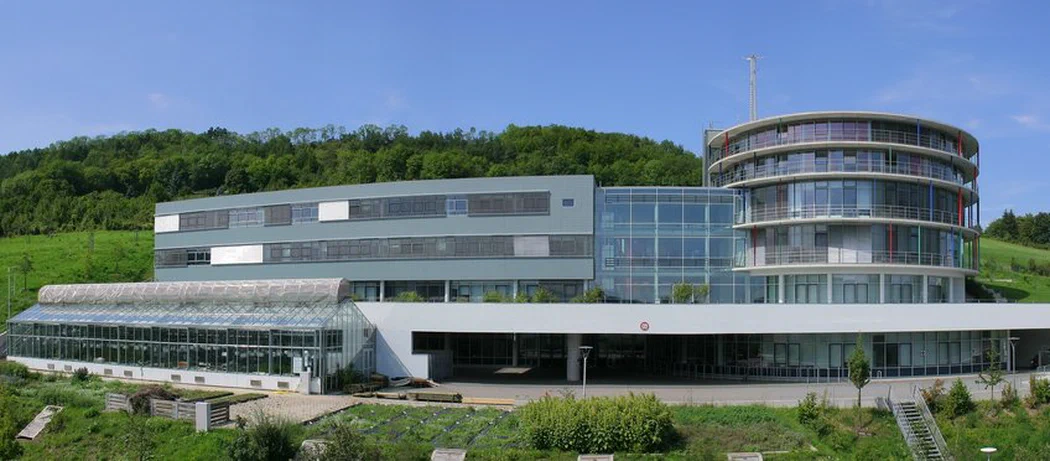
Max Planck Institute for Biogeochemistry

Located in Jena, this research center investigates how living organisms and physical processes interact to shape the Earth’s climate and environment. Since its start in 1997, it has become a central authority on the global carbon, water, and nutrient cycles, specifically focusing on how these systems respond to human impact.

The facility is famous for managing the Zotino Tall Tower Observatory in Siberia, a massive mast used to measure greenhouse gases across the northern hemisphere. Researchers here use a mix of field experiments and complex computer modeling to predict future environmental shifts. Currently, the institute is heavily involved in tracking how rising temperatures affect the ability of forests and soils to store carbon dioxide on a global scale.

Cover Photo of -

Original Publication

Soil Organic Matter Persistence as a Stochastic Process: Age and Transit Time Distributions of Carbon in Soils

Carlos A. Sierra,

Alison M. Hoyt,

Yujie He,

Susan Trumbore

Published in

Radiocarbon Constraints Imply Reduced Carbon Uptake by Soils During the 21st Century

Yujie He,

Susan Trumbore,

Margaret Torn,

J. W. Harden,

Lydia J. S. Vaughn,

Published in

How Fresh is Maple Syrup? Sugar Maple Trees Mobilize Carbon Stored Several Years Previously During Early Springtime Sap-ascent

Jan Muhr,

Christian Messier,

Sylvain Delagrange,

Susan Trumbore,

Xiaomei Xu,

Published in

Citation

Susan Trumbore, 

Latest Thinking, 

What Happens to Carbon Dioxide in Plant and Soil Systems?, 

https://doi.org/10.21036/LTPUB10795, 

Credits:

© Susan Trumbore 

and Latest Thinking

This work is licensed under CC-BY 4.0