What Is the Role of the Eurasian Forests Under a Warming Climate?
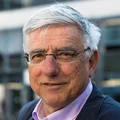
Martin Heimann
Profile Picture of - Martin Heimann

Martin Heimann

Abstract information

The Eurasian forests are an important component in the earth’s climate system: Forests contain a lot of carbon in the vegetation and in the soil. But their role under warming conditions is still unclear – on the one hand, a higher CO2 level in the air acts like a fertilizer for plants that grow and thus store more CO2 in the form of carbon. On the other hand, microbes that like warmer temperatures bring the soil to decompose faster and release even more CO2 and methane. To monitor long-term biogeochemical changes, a German-Russian research collaboration established an observatory in the Siberian taiga. Since 2006, the regional effects of global warming are studied from the Zotino Tall Tower Observatory. As MARTIN HEIMANN explains in this video, two of the main findings of the long-term measurements are that currently the western Siberian forests store more carbon than they release. However, due to the many bogs the region is also a source of methane, another important greenhouse gas.

DOI:

https://doi.org/10.21036/LTPUB10213

Researcher

Martin Heimann is Director of the Max Planck Institute for Biogeochemistry in Jena, and Honorary Professor at Friedrich-Schiller University, Jena. He is a member of the Academia Europaea and was appointed Guest Professor at the University of Helsinki. Heimann’s research focuses on the biogeochemistry of the global carbon cycle. A major part of his research is dedicated to long-term measurements of biogeochemical changes in the Eurasian forests, and their role in the earth’s climate system. Heimann contributed to the Intergovernmental Panel on Climate Change (IPCC), which was awarded the Nobel Peace Prize in 2007.
Institution information

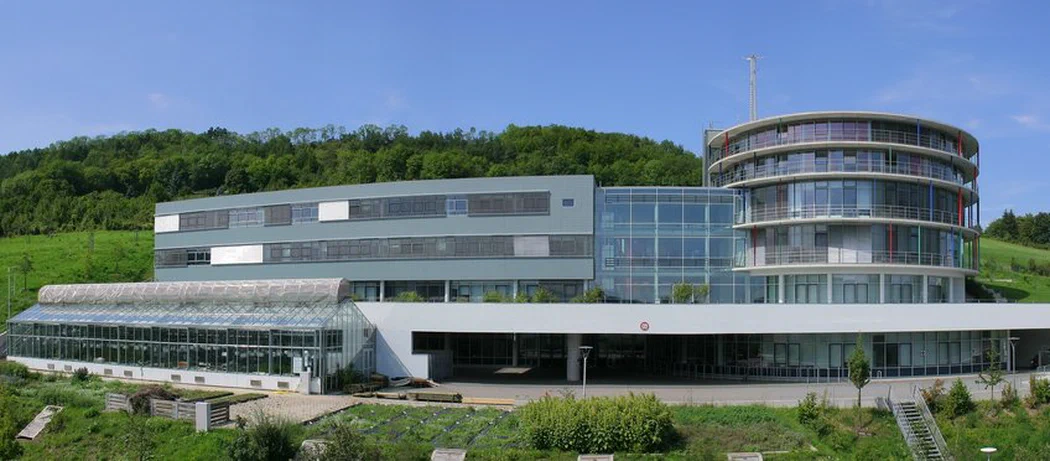
Max Planck Institute for Biogeochemistry

Located in Jena, this research center investigates how living organisms and physical processes interact to shape the Earth’s climate and environment. Since its start in 1997, it has become a central authority on the global carbon, water, and nutrient cycles, specifically focusing on how these systems respond to human impact.

The facility is famous for managing the Zotino Tall Tower Observatory in Siberia, a massive mast used to measure greenhouse gases across the northern hemisphere. Researchers here use a mix of field experiments and complex computer modeling to predict future environmental shifts. Currently, the institute is heavily involved in tracking how rising temperatures affect the ability of forests and soils to store carbon dioxide on a global scale.

Cover Photo of -

Original Publication

The Zotino Tall Tower Observatory (ZOTTO): Quantifying Large Scale Biogeochemical Changes in Central Siberia

Martin Heimann,

Ernst‐Detlef Schulze,

J. Winderlich,

Meinrat O. Andreae,

Xuguang Chi,

Published in

Citation

Martin Heimann, 

Latest Thinking, 

What Is the Role of the Eurasian Forests Under a Warming Climate?, 

https://doi.org/10.21036/LTPUB10213, 

Credits:

© Martin Heimann 

and Latest Thinking

This work is licensed under CC-BY 4.0