Why Are Some Genetically Caused Diseases so Frequent in the Human Population?

Tobias Lenz
Profile Picture of - Tobias Lenz

Tobias Lenz

Abstract information

Why are some people more prone to sickness than others? Individual people differ in their genetic predisposition to disease. TOBIAS LENZ and his research group investigate whether historical selection by pathogens – by infectious agents – has shaped the genetic makeup of our immune system today. Their specific focus here is on whether selection by pathogens on specific immune genes, so-called HLA genes, has affected the frequency of disease-causing mutation in the neighborhood of these genes. As he explains in this video, they used both computer simulations as well as real sequencing of humans and ran a project on the genetics of medieval Europeans who suffered from leprosy. Their findings indeed support their hypothesis. This can explain, at least in part, the surprising frequency of some genetically caused diseases in the human population today.

DOI:

https://doi.org/10.21036/LTPUB10501

Researcher

Tobias Lenz is Research Group Leader in Evolutionary Immunogenomics at the Max Planck Institute for Evolutionary Biology. Previously, he was Postdoctoral Fellow at the same Max Planck Institute and at Harvard Medical School. His main research focus is on immunogenomics, the evolution of the major histocompatibility complex and the genetics of host-parasite coevolution. For his current research project he received an Emmy Noether Grant from the German Research Foundation.
Institution information

Leuphana University, Lüneburg

Leuphana University Lüneburg is a public “model university” established in 1946, known for its radical departure from traditional German academic structures. It operates on a unique liberal arts-inspired model where all undergraduate students, regardless of their major, start with a shared interdisciplinary “Leuphana Semester” to foster critical thinking and social responsibility.

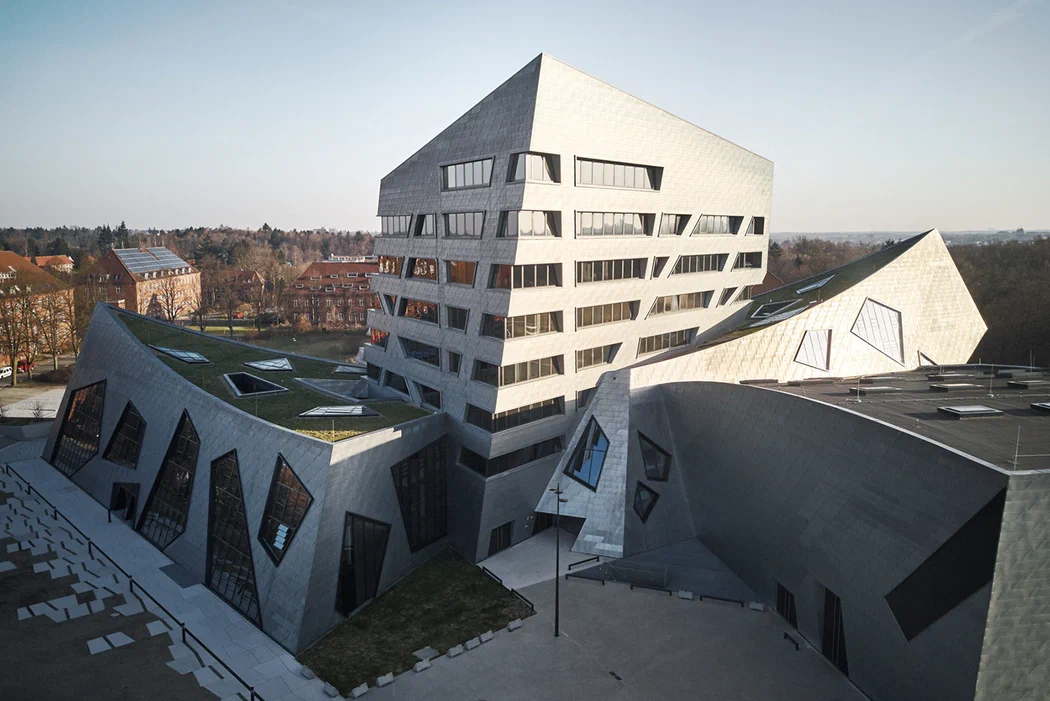
The university is highly regarded for its focus on sustainability, cultural studies, and education research. Its central campus is visually defined by the Libeskind Building, a deconstructivist landmark designed by architect Daniel Libeskind. As a climate-neutral institution, it emphasizes humanism and entrepreneurship, serving as a prominent hub for social innovation and sustainable development in Lower Saxony.

Cover Photo of -

Original Publication

Excess of Deleterious Mutations around HLA Genes Reveals Evolutionary Cost of Balancing Selection

Tobias L. Lenz,

Victor Spirin,

Daniel M. Jordan,

Shamil Sunyaev

Published in

Ancient DNA Study Reveals HLA Susceptibility Loci for Leprosy in Medieval Europeans

Citation

Tobias Lenz, 

Latest Thinking, 

Why Are Some Genetically Caused Diseases so Frequent in the Human Population?, 

https://doi.org/10.21036/LTPUB10501, 

Credits:

© Tobias Lenz 

and Latest Thinking

This work is licensed under CC-BY 4.0