How Has the Issue of Gender Been Negotiated in Tunisia’s Recent History?

Steffi Hobuß
Profile Picture of - Steffi Hobuß

Steffi Hobuß

Abstract information

Since Tunisia’s independence in 1956, the country has had a unique approach to the issue of gender compared to other Arabic countries as it pushed a public discourse on modernization and women’s rights. In this video, STEFFI HOBUß describes the approach of her researcher group to analyze how the issue of gender has been negotiated in Tunisia and how this has influenced Tunisia’s cultural memory ever since. By combining the philosophical idea of the resignification of concepts with an empirical approach, the team found that on the one hand, there were real improvements for women but on the other hand, the state instrumentalized and almost entirely dominated the discourse on women’s rights in order to present as a modern state what was effectively a dictatorship. This has strong implications for today’s Tunisia because any ideas and policies of modernization or feminism carry dictatorial connotations.

DOI:

https://doi.org/10.21036/LTPUB10387

Researcher

Steffi Hobuß is Senior Lecturer and Associate Professor of Philosophy as well as Vice-Dean for Internationalization at the Leuphana University of Lüneburg. Previously, she has held teaching and research positions at the University of Bielefeld and the University of Hannover. She has won the Leuphana University of Lüneburg Award for Innovative Teaching three times, most recently in 2015. Since January 2016, she is the leader of the Tunisian-German interdisciplinary research project ‘Transformation, Culture, Gender’. Since 2017 she acts as leader of the Leuphana College.
Institution information

Leuphana University, Lüneburg

Leuphana University Lüneburg is a public “model university” established in 1946, known for its radical departure from traditional German academic structures. It operates on a unique liberal arts-inspired model where all undergraduate students, regardless of their major, start with a shared interdisciplinary “Leuphana Semester” to foster critical thinking and social responsibility.

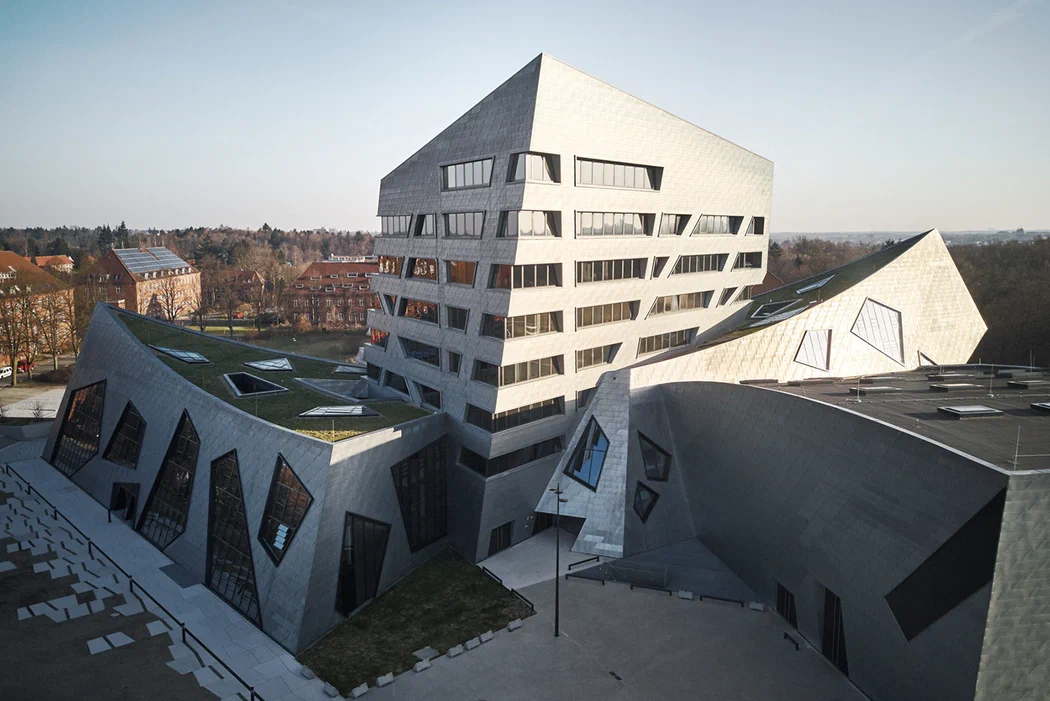
The university is highly regarded for its focus on sustainability, cultural studies, and education research. Its central campus is visually defined by the Libeskind Building, a deconstructivist landmark designed by architect Daniel Libeskind. As a climate-neutral institution, it emphasizes humanism and entrepreneurship, serving as a prominent hub for social innovation and sustainable development in Lower Saxony.

Cover Photo of -

Original Publication

Sprachliche Resignifikation im Kontext der Diktatur: Der Begriff der Frauenrechte in Tunesien (1987-2011)

Nadia El Ouerghemmi,

Steffi Hobuß

Published in

Citation

Steffi Hobuß, 

Latest Thinking, 

How Has the Issue of Gender Been Negotiated in Tunisia’s Recent History?, 

https://doi.org/10.21036/LTPUB10387, 

Credits:

© Steffi Hobuß 

and Latest Thinking

This work is licensed under CC-BY 4.0