How Can We Measure Honesty and Patterns of Dishonesty?
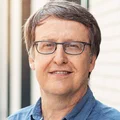
Urs Fischbacher
Profile Picture of - Urs Fischbacher

Urs Fischbacher

Abstract information

People’s honesty is often a crucial consideration in politics and in economics as well as in society more generally. In this video, URS FISCHBACHER outlines his development of an instrument to measure honesty and patterns of dishonesty. Participants rolled a die and were told that their number corresponded to a payoff. Though the experiment showed that people were dishonest, it also demonstrated that this was not always the case. Fischbacher explains how the initial experiment has been expanded and refined to bring about advances in both our theoretical and practical conception of honesty.

DOI:

https://doi.org/10.21036/LTPUB10687

Researcher

Urs Fischbacher is Chair of Applied Research in Economics at the University of Konstanz and Director of the Thurgau Institute of Economics. Having pursued a successful career as a software developer following his doctoral work in mathematics, Professor Fischbacher’s focus shifted to economics at the University of Zurich. Fischbacher’s main research interests include experimental economics, behavioral economics, and social preferences and, in 2016, he received the Joachim Herz Economics Prize for Best Research Work.
Institution information

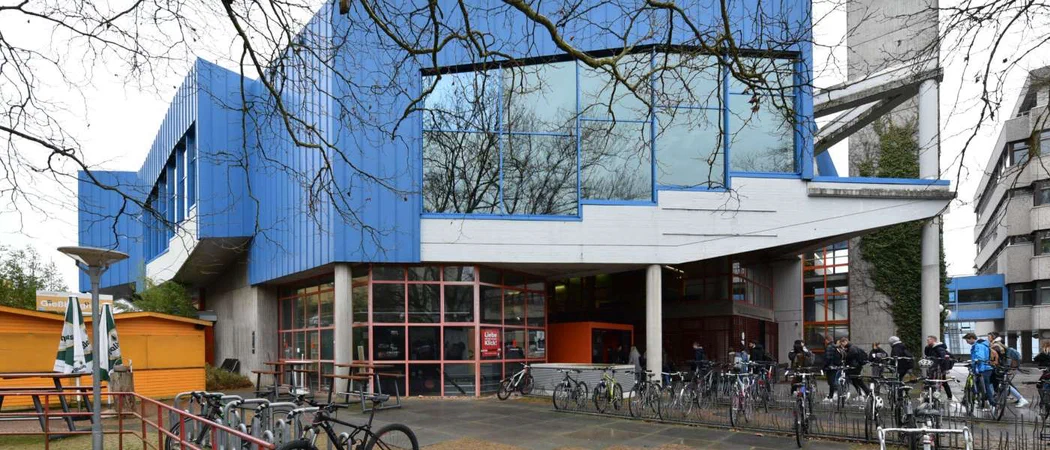
University of Konstanz (Universität Konstanz)

Founded in 1966, the University of Konstanz is a premier research institution situated on the shores of Lake Constance. Designed as a “reform university,” its compact campus was built to eliminate barriers between departments, fostering a culture of creative, cross-disciplinary collaboration.

The university is highly regarded for its research in Political Science, Economics, and Life Sciences, specifically through its work on collective behavior and social inequality. With around 11,000 students, it consistently ranks among the world’s best young universities, offering a high-caliber academic environment in a unique location bordering Switzerland and Austria.

Cover Photo of -

Original Publication

Lies in Disguise - An Experimental Study on Cheating

Urs Fischbacher,

Franziska Föllmi-Heusi

Published in

Book Recommendation

Clean Code

Robert C. Martin

Of course, complicated code can also work, but it leads to inefficient workflows. "Clean Code" is the programming bible for anyone who wants to tidy up their code and everyday work

Citation

Urs Fischbacher, 

Latest Thinking, 

How Can We Measure Honesty and Patterns of Dishonesty?, 

https://doi.org/10.21036/LTPUB10687, 

Credits:

© Urs Fischbacher 

and Latest Thinking

This work is licensed under CC-BY 4.0