In this video, MARKUS REICHSTEIN explores how artificial intelligence can improve early warning systems for climate-related hazards. Starting with a curiosity-driven approach to predicting landscapes from climate data, his research evolved into understanding how ecosystems respond to weather patterns and how these responses can be forecasted. Reichstein and his team analyze the full early warning chain - from observation to decision-making - and identify weak links, especially in impact forecasting and communication. Using AI, they aim to enhance localized predictions and generate intuitive warnings, such as visualizations of expected damage. The study supports the UN’s “Early Warnings for All” initiative and highlights the dual potential of AI to drive both fundamental research and real-world societal impact.
DOI:
https://doi.org/10.21036/LTPUB101197
Researcher
Markus Reichstein has been director at the Max-Planck-Institute for Biogeochemistry since 2012, heading the Department of Biogeochemical Integration. Additionally Reichstein is Prof. for Global Ecology at the Friedrich-Schiller University Jena and founding director of the ELLIS Unit Jena and the ELLIS program "Machine learning for Earth and Climate science". His main research interests revolve around questions of how ecosystems respond to climate variability and extremes, with a strong emphasis on integration of machine learning and system modelling to solve these questions. Since 2014, Reichstein has been a member of the Climate Panel for the German State of Thuringia. A previous winner Microsoft’s Jim Gray seed award for excellence in e-science, Reichstein was the 2020 recipient of Germany’s most generously endowed research grant, the German Research Foundation’s (DRG) Gottfried Wilhelm Leibniz Prize.
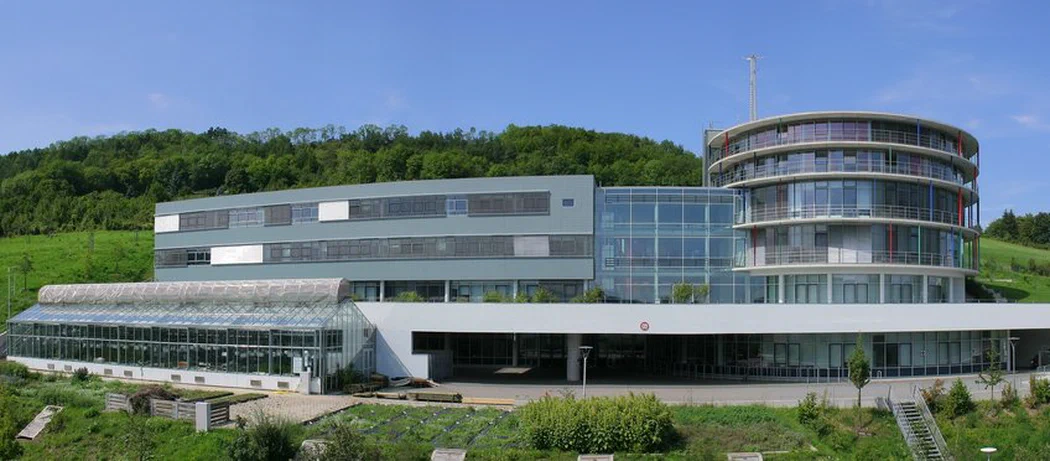
Institution
The research is dedicated to the study of global biogeochemical cycles and their long-term interactions with the biosphere, the atmosphere, the geosphere and the entire climate system. We want to better understand how living organisms - including humans - exchange basic resources such as water, carbon, nitrogen and energy with their environment and how this affects global climate and ecosystems. Biogeochemistry is the science of the Earth's metabolism. Elements essential to life such as carbon, nitrogen, oxygen and phosphorus are constantly undergoing biological, chemical and physical transformations as they are exchanged between different parts of the Earth, the lithosphere, hydrosphere, biosphere and atmosphere. The "biogeochemical cycles" quantitatively describe the distribution and exchange of elements between these components of the Earth system.
Show more
Original publication
Early warning of complex climate risk with integrated artificial intelligence
Markus Reichstein, Vitus Benson, Jan Blunk, Gustau Camps-Valls, Felix Creutzig, Carina J. Fearnley, Boran Han, Kai Kornhuber, Nasim Rahaman, Bernhard Schölkopf, José María Tárraga, Ricardo Vinuesa, Karen Dall et al
Nature Communications
Published in 2025