What Really Happens When We Breathe in Polluted Air?

Abstract information

In this video, THOMAS BERKEMEIER explores how air pollution affects human health on the chemical level. By modeling the lungs as a “multiphase chemical reactor,” his research shows how inhaled particles and gases trigger reactions that produce harmful reactive oxygen species. His findings reveal that fine particles act less as direct sources of reactive oxygen species and more as catalysts that increase their reactivity. This work offers new insights into how air pollution toxicity should be measured, regulated, and linked to long-term health risks.

DOI:

https://doi.org/10.21036/LTPUB101239

Researcher

Thomas Berkemeier is head of the Chemical Kinetics & Reaction Mechanisms Group at the Max Planck Institute for Chemistry in Mainz. His research explores multiphase chemical kinetics, from the oxidative aging of aerosols to the health effects of air pollution. He earned his PhD summa cum laude from Johannes Gutenberg University Mainz in 2016, conducted postdoctoral research at Georgia Tech, and received the Otto Hahn Medal of the Max Planck Society.
Institution information

Max Planck Institute for Chemistry

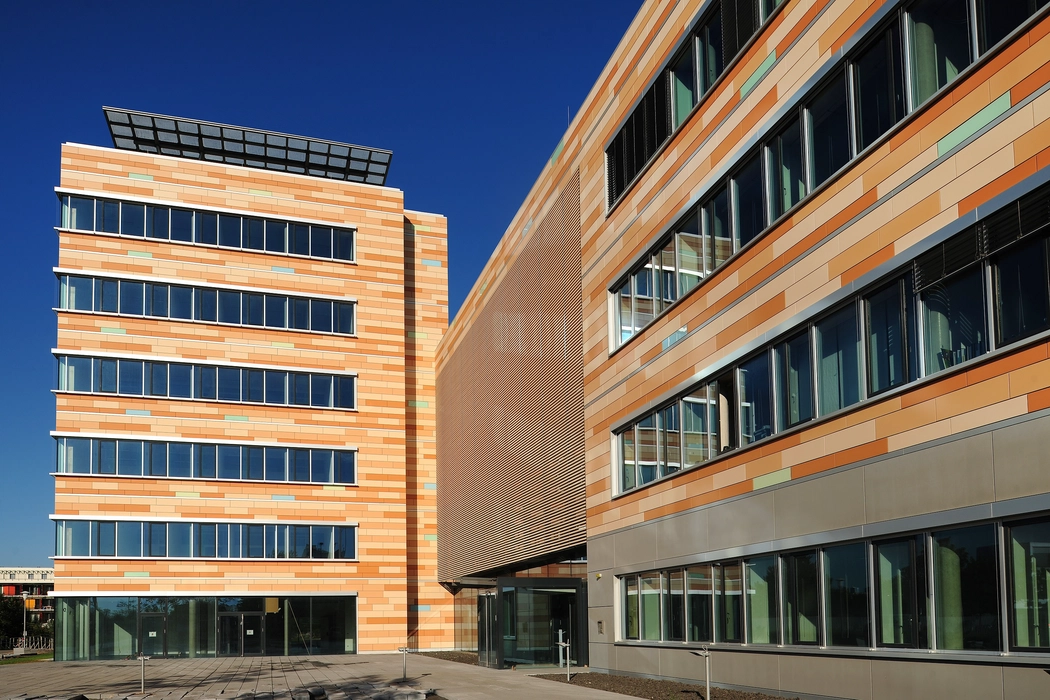
The current research at the Max Planck Institute for Chemistry (MPIC) aims at an integral understanding of chemical processes in the Earth system, especially in the atmosphere and biosphere. Investigations address a wide range of interactions between air, water, soil, life and climate in the course of Earth history up to today´s human-driven epoch, the Anthropocene. The Max Planck Institute for Chemistry is one of the two oldest institutes of the Max Planck Society. It was founded in 1912 as the Kaiser Wilhelm Institute for Chemistry in Berlin, and it was relocated to Mainz in 1949. Particularly well-known scientists in the Institute´s history are the Nobel laureates Richard Willstätter, Otto Hahn, and Paul Crutzen. Our scientists conduct laboratory experiments, collect samples and record measurement data during field campaigns utilizing airplanes, ships, and vehicles. The practical work is complemented with mathematical models that simulate chemical, physical, and biological processes from molecular to global scales. One of the major goals is to find out how air pollution, including reactive trace gases and aerosols, affect the atmosphere, biosphere, climate, and public health.
Max Planck Institute for Chemistry

Original Publication

Influence of ambient and endogenous H2O2 on reactive oxygen species concentrations and OH radical production in the respiratory tract

Citation

Thomas Berkemeier, 

Latest Thinking, 

What Really Happens When We Breathe in Polluted Air?, 

https://doi.org/10.21036/LTPUB101239, 

Credits:

© Thomas Berkemeier

and Latest Thinking

This work is licensed under CC-BY 4.0