Why Do Cells Not Regenerate After Disease or Upon Ageing?

Carien Niessen
Profile Picture of - Carien Niessen

Carien Niessen

Abstract information

Our skin epidermis consists of many lifelong regenerating cell layers which provide a barrier that prevents water loss and protects us from heat and radiation. In this video, CARIEN NIESSEN explores why these cells fail to regenerate in cases of disease or with age. Paying particular attention to the influence of cell structure, Niessen’s method focuses on three scale lengths: protein, cell and organ. Outlining the ways in which biochemical and physical signals interact in the operation of the skin barrier, Niessen’s research has important implications not only for our understanding of these processes but also for diseases like psoriasis, diabetes and cancer.

DOI:

https://doi.org/10.21036/LTPUB10801

Researcher

Carien Niessen is Professor of Molecular Dermato-Oncology in the University of Cologne’s Faculty of Medicine. She is also the scientific coordinator of CECAD (Cologne Excellence Cluster on Stress Responses in Ageing-Associated Diseases). Having conducted her doctoral research at the University of Amsterdam, Niessen completed a postdoctoral fellowship at the Memorial Sloan-Kettering Cancer Centre in New York. A board member of the European Society of Dermatological Science, Niessen won the 2005 ISP and SCUR award.
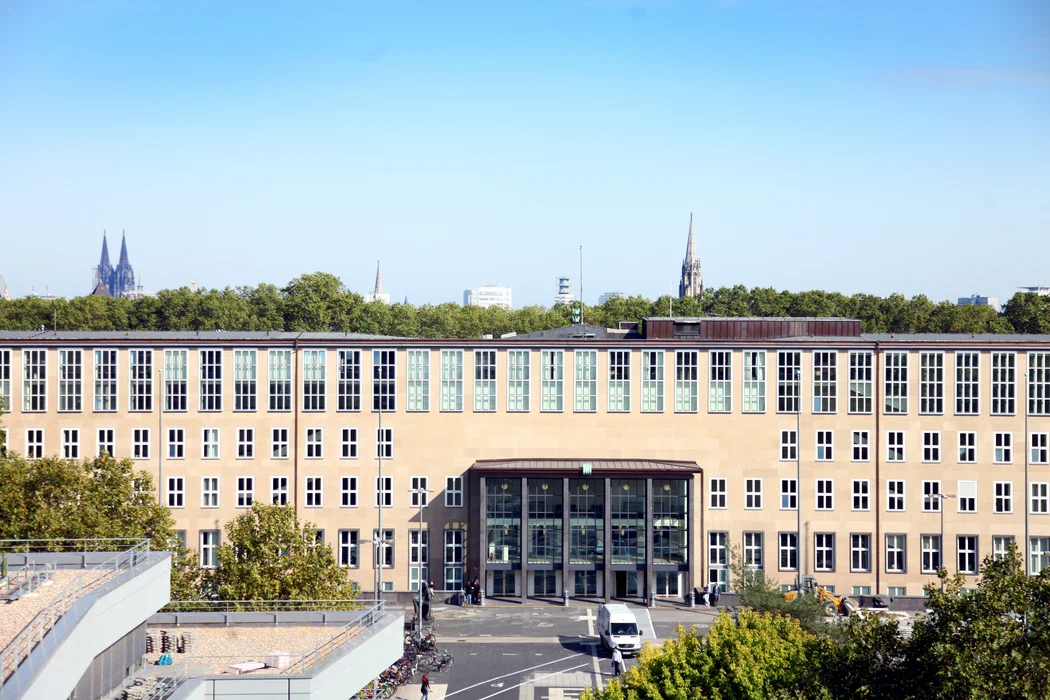
Institution information

University of Cologne (Universität zu Köln)

Founded in 1388, the University of Cologne (UoC) is the second oldest German university. Its heritage goes hand in hand with a thoroughly modern outlook. The UoC is one of the leading German research universities with an increasing international reach. In 2012 the University won substantial funding in the German Excellence Initiative and is now one of eleven German Excellence Universities. The UoC has a culture which supports individual research as well as medium and large scale collaborative projects. Our flexible approach allows us to reward individual excellence, develop promising fields, build up critical mass and embrace emerging new fields. Research is conducted in our six faculties and in a number of cross-faculty research centers. We are firmly committed to the advancement of fundamental research and have particular strengths in our six competence areas: Aging and demographic change, Social and economic behavior, Quantitative modeling of complex systems, Cultures and societies in transition, Social inequalities and intercultural education and Plant sciences. (Source: University of Cologne)
University of Cologne (Universität zu Köln)
Cover Photo of - University of Cologne (Universität zu Köln)

Original Publication

The Disintegrin/Metalloproteinase Adam10 is Essential for Epidermal Integrity and Notch-Mediated Signaling

Silvio Weber,

Michaela Niessen,

Johannes Prox,

Renate Lüllmann‐Rauch,

Annika Schmitz,

Published in

Book Recommendation

Wild Swans: Three Daughters of China

Jung Chang

Based on the lives of three women, Jung Chang tells the eventful history of China: From the grandmother who served as a concubine, through the communist mother to the daughter in today's China, it is a story full of suffering, violence and courage.

Citation

Carien Niessen, 

Latest Thinking, 

Why Do Cells Not Regenerate After Disease or Upon Ageing?, 

https://doi.org/10.21036/LTPUB10801, 

Credits:

© Carien Niessen 

and Latest Thinking

This work is licensed under CC-BY 4.0