How Can Artificial Intelligence Enhance Our Understanding of the Earth System?

Markus Reichstein
Profile Picture of - Markus Reichstein

Markus Reichstein

Abstract information

The Earth system is unique and highly complex, presenting a daunting challenge to researchers that seek to model and understand it. Noting that existing approaches seem unable to arrive at reliable predictions for the implications of CO2 emissions, in this video, MARKUS REICHSTEIN proposes that new methodologies incorporating machine learning and artificial intelligence be brought to bear on the problem. Identifying notable parallels between conceptual challenges in the Earth system and successful applications of machine learning, Reichstein is careful to foreground problematic aspects of AI, arguing that the best methodological approach may well be hybrid, involving more traditional modeling alongside the data centered approach.

DOI:

https://doi.org/10.21036/LTPUB10819

Researcher

Markus Reichstein has been director at the Max-Planck-Institute for Biogeochemistry since 2012, heading the Department of Biogeochemical Integration. Additionally Reichstein is Prof. for Global Ecology at the Friedrich-Schiller University Jena and founding director of the ELLIS Unit Jena and the ELLIS program "Machine learning for Earth and Climate science". His main research interests revolve around questions of how ecosystems respond to climate variability and extremes, with a strong emphasis on integration of machine learning and system modelling to solve these questions. Since 2014, Reichstein has been a member of the Climate Panel for the German State of Thuringia. A previous winner Microsoft’s Jim Gray seed award for excellence in e-science, Reichstein was the 2020 recipient of Germany’s most generously endowed research grant, the German Research Foundation’s (DRG) Gottfried Wilhelm Leibniz Prize.
Institution information

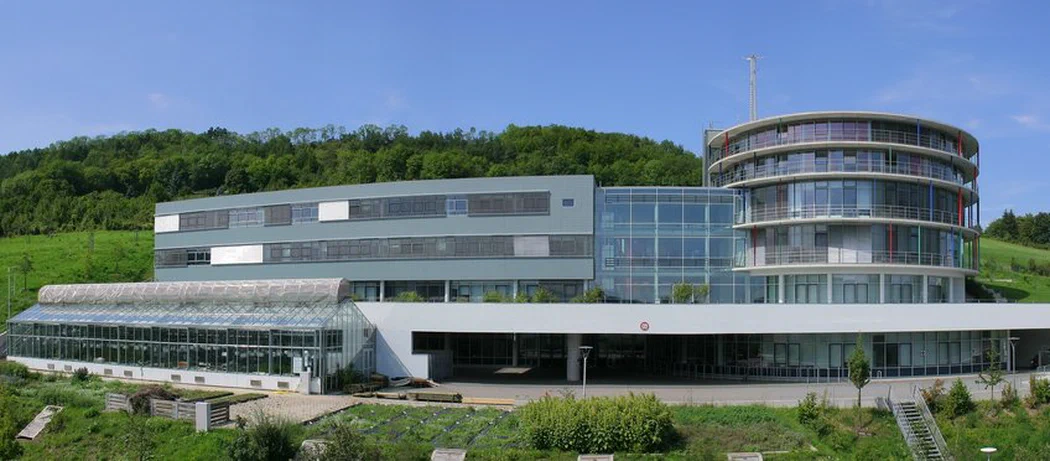
Max Planck Institute for Biogeochemistry

Located in Jena, this research center investigates how living organisms and physical processes interact to shape the Earth’s climate and environment. Since its start in 1997, it has become a central authority on the global carbon, water, and nutrient cycles, specifically focusing on how these systems respond to human impact.

The facility is famous for managing the Zotino Tall Tower Observatory in Siberia, a massive mast used to measure greenhouse gases across the northern hemisphere. Researchers here use a mix of field experiments and complex computer modeling to predict future environmental shifts. Currently, the institute is heavily involved in tracking how rising temperatures affect the ability of forests and soils to store carbon dioxide on a global scale.

Cover Photo of -

Original Publication

Deep Learning and Process Understanding for Data-Driven Earth System Science

Markus Reichstein,

Gustau Camps‐Valls,

Björn Stevens,

Martin Jung,

Joachim Denzler,

Published in

Citation

Markus Reichstein, 

Latest Thinking, 

How Can Artificial Intelligence Enhance Our Understanding of the Earth System?, 

https://doi.org/10.21036/LTPUB10819, 

Credits:

© Markus Reichstein 

and Latest Thinking

This work is licensed under CC-BY 4.0