Beyond

If you want to get to know the scientists behind the work even better, this is just the right place for you. In this section of Beyond, the researchers present books which have impacted their lives and their ways of thinking in meaningful ways. The books presented range from novels, to memoirs, to science books of all sorts. You can filter the books by genre or just scroll through the list. This is also a great way to get inspiration for your own reading!

Ralf Schiebel

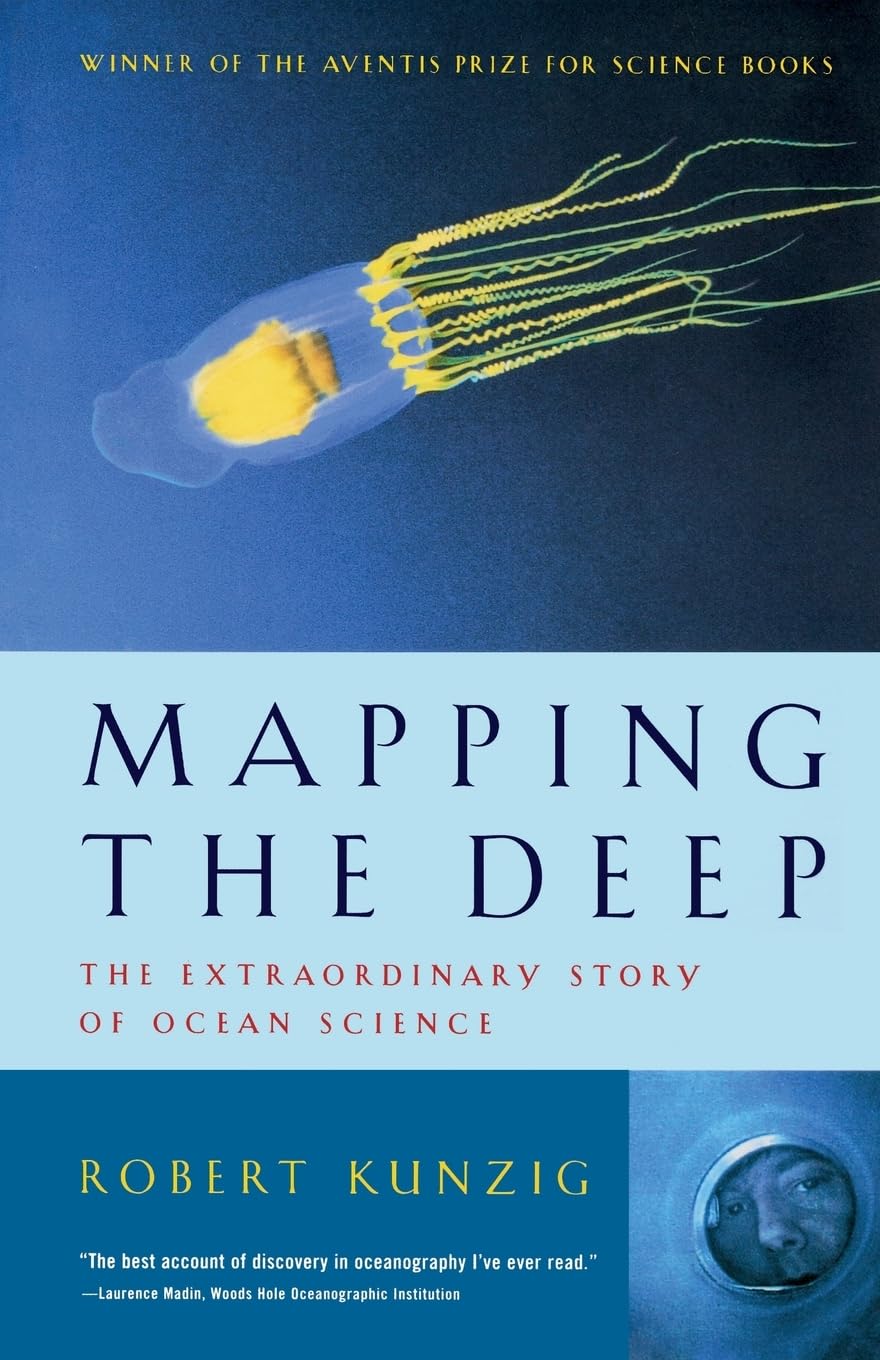
Mapping the Deep

Mapping the deep explores how little we truly know about the oceans, which cover most of Earth and shape its climate and life. As humans move toward exploiting the sea on an unprecedented scale, it highlights recent scientific discoveries that have transformed our understanding. From deep-sea vents to microscopic plants and global currents, Kunzig’s lyrical writing reveals the ocean as a dynamic, mysterious, and vital frontier.

Nicolas Bourgon

Human Adaptation in the Asian Palaeolithic

This book examines the first human colonization of Asia and particularly the tropical environments of Southeast Asia during the Upper Pleistocene. In studying the unique character of the Asian archaeological record, it reassesses long-accepted propositions about the development of human 'modernity.' Ryan J. Rabett reveals an evolutionary relationship between colonization, the challenges encountered during this process – especially in relation to climatic and environmental change – and the forms of behaviour that emerged. This book argues that human modernity is not something achieved in the remote past in one part of the world, but rather is a diverse, flexible, responsive and ongoing process of adaptation.

Sarosh Alam Ghausi

Thermodynamic Foundations of the Earth System

Thermodynamics governs all physical processes and is key to understanding planetary dynamics. This book explores how Earth system processes perform work, derive energy, and face limits. It applies thermodynamic principles to solar radiation, motion, geochemical cycles, and biotic activity, offering a novel view of Earth’s functioning, evolution, and disequilibrium. Human activity is analyzed as part of the thermodynamic Earth system. Using simple models and basic mathematics, the book makes these concepts accessible to researchers and graduate students across Earth and environmental sciences.

Kelley De Polt

Disasterology

Part memoir, part expert analysis, Disasterology is a personal and insightful account of a country unprepared for today’s disasters and those ahead. Dr. Montano, a disaster researcher, examines why disasters aren’t inevitable, how they can be managed, and why prevention and recovery often fail marginalized communities. Drawing on major disasters, including COVID-19, she highlights the impact of decision-making, media, and climate change, offering strategies to better prepare for and respond to future crises. Accessible and urgent, this book is essential for understanding and improving disaster management.